.png)
Tooth Sensitivity to Cold & Hot – Causes and Treatment

Do you feel a sudden sharp pain when drinking cold water or eating something hot?
Tooth sensitivity to hot and cold is a common dental issue that affects many people. The discomfort may last only a few seconds, but it can make everyday activities like eating or drinking uncomfortable.
Sensitive teeth usually occur when the protective layer of the tooth is damaged or when the inner sensitive part of the tooth becomes exposed.
If you're experiencing tooth sensitivity in Indiranagar or nearby areas in Bangalore, understanding the cause is the first step toward effective treatment.
What Causes Tooth Sensitivity?
Tooth sensitivity usually happens when dentin, the inner layer of the tooth, becomes exposed.
Dentin contains microscopic channels that connect to the nerve inside the tooth. When exposed, temperature changes can stimulate the nerve and cause pain.
Several dental conditions can lead to this exposure.
Common Causes of Tooth Sensitivity to Cold and Hot
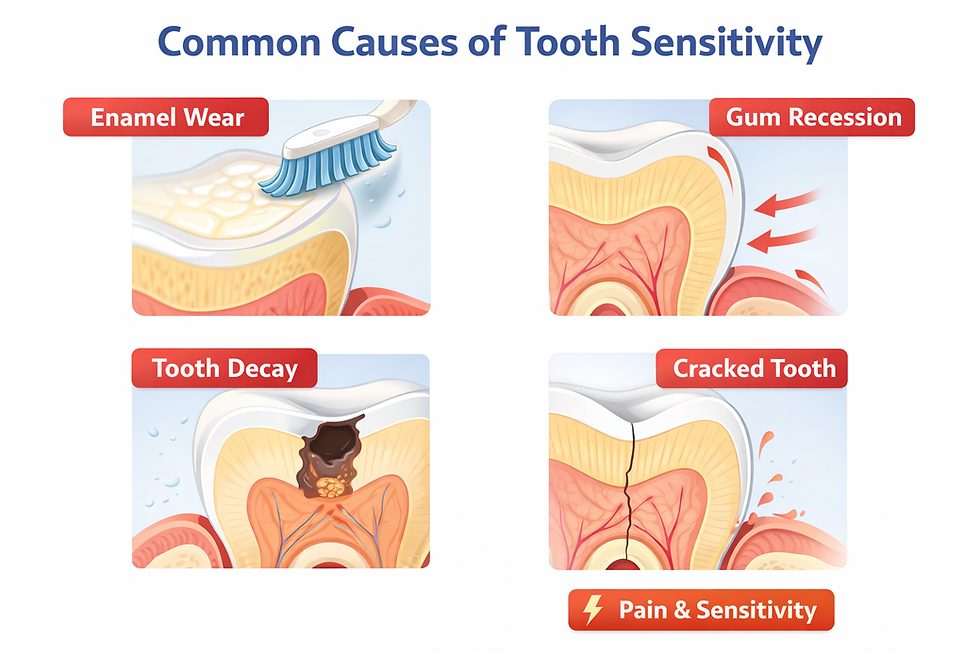
1. Enamel Wear
Tooth enamel protects the outer surface of the tooth. When enamel wears down, the underlying dentin becomes exposed.
Common causes include:
Aggressive brushing
Acidic foods and drinks
Teeth grinding
2. Gum Recession
When gums recede, the roots of the teeth become exposed. Tooth roots do not have enamel protection, making them highly sensitive to temperature.
Signs of gum recession include:
Teeth appearing longer
Sensitivity near the gumline
Bleeding gums
3. Tooth Decay (Cavities)
Cavities create openings in the tooth structure, allowing hot or cold sensations to reach the inner tooth.
Other symptoms may include:
Pain while chewing
Visible dark spots on teeth
Food getting stuck in the tooth
4. Cracked or Damaged Teeth
A crack in the tooth can expose dentin and cause sharp sensitivity when eating or drinking.
Sometimes the crack may not be visible but still cause discomfort.
5. Recent Dental Treatment
Some patients experience temporary sensitivity after treatments such as:
Teeth whitening
Dental fillings
Professional cleaning
This sensitivity usually improves within a few days.
When Is Tooth Sensitivity a Sign of a Serious Problem?
Occasional sensitivity is common, but persistent pain may indicate a deeper dental issue.
You should see a dentist if:
Sensitivity lasts for more than a few days
Pain becomes severe
You feel discomfort while chewing
There is swelling around the tooth
These symptoms may indicate deep decay or infection, which may require prompt treatment.
Treatment Options for Sensitive Teeth
The treatment for tooth sensitivity depends on its underlying cause.
Desensitizing Toothpaste
Special toothpastes help block nerve signals from the tooth surface.
Fluoride Treatment
Professional fluoride application strengthens enamel and reduces sensitivity.
Dental Fillings
If sensitivity is caused by cavities, filling the tooth can resolve the problem.
Gum Treatment
Treating gum disease can protect exposed tooth roots.
Root Canal Treatment
If the nerve inside the tooth is affected, a root canal may be required to eliminate pain.
How to Prevent Tooth Sensitivity
You can reduce the risk of tooth sensitivity by following good oral hygiene habits.
Brush gently with a soft toothbrush
Use fluoride toothpaste
Avoid excessive acidic foods and drinks
Wear a night guard if you grind your teeth
Visit your dentist regularly for checkups
Preventive care helps maintain strong enamel and healthy gums.
Tooth Sensitivity Treatment in Indiranagar, Bangalore
If you're experiencing sensitivity while eating or drinking, it’s important to identify the cause early.
At Dental Sanctuary, Indiranagar, we focus on accurate diagnosis and personalized treatment for sensitive teeth.
Our approach includes:
Comprehensive dental examination
Digital X-rays when required
Preventive and restorative treatments based on individual needs
Early treatment can prevent sensitivity from progressing into more serious dental problems.
Conclusion
Tooth sensitivity to hot and cold is often a sign that the tooth’s protective layer has been compromised.
While mild sensitivity may improve with proper care, persistent discomfort should not be ignored.
A dental evaluation can help identify the underlying cause and provide the right treatment to restore comfort and protect your oral health.


